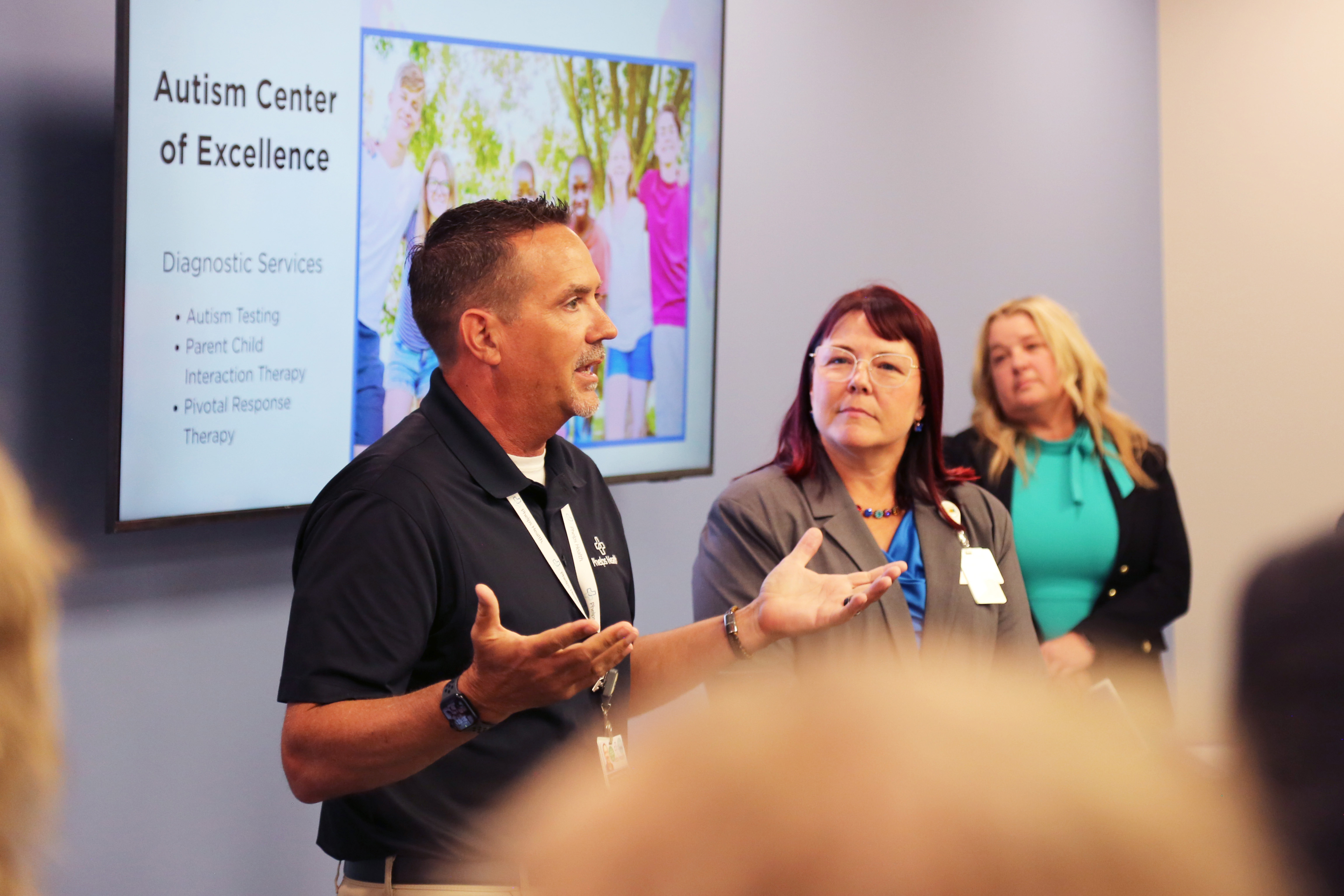

At Phelps Health, we are more than a health system—we are part of the fabric of this community. Our employees live here, raise families here and are committed to making this region stronger and healthier.
And while healthcare touches everyone in our region, the system behind it can feel complicated and confusing. “Understanding the Realities of Healthcare" is a series of articles and podcasts that will bring you behind the scenes at Phelps Health—explaining the pressures, decisions and changes shaping care today.
Created by Jason Shenefield, president and CEO of Phelps Health, this series explores topics like staffing, costs, regulations and innovation—and how they impact the patients and communities we serve.
We invite you to follow along, learn with us and help us build a future that delivers the care and compassion you’ve come to expect from Phelps Health.
Topic 1: Why We're Starting This Conversation
Over the past several months, I’ve had many conversations with people across our community—patients, families, business owners and employees—who care deeply about Phelps Health. Those conversations often come with important questions:
- Why is healthcare so expensive?
- Why do we sometimes have long waits or staffing shortages?
- Why does it feel like the system is so complicated?
These are fair and honest questions, and they deserve fair and honest answers.
At Phelps Health, we believe that trust starts with transparency. Healthcare is one of the most personal and emotional parts of our lives, and yet it’s also one of the most complex industries in our country. Most people only see a small part of what goes into providing care, and it can be frustrating when things don’t seem to make sense.
That’s why I want to begin a conversation that takes you behind the scenes of healthcare. We’ll explore some of the biggest challenges we face together, such as:
- Recruiting and keeping talented doctors, nurses and clinical staff
- The true cost of healthcare and how hospitals like ours are funded
- The impact of state and federal regulations on how we provide care
- What we’re doing at Phelps Health to address these challenges while staying focused on our mission to serve you
My goal isn’t to defend the system—it’s to explain it. Because when people understand the “why” behind what we do, it builds trust and opens the door for collaboration and solutions.
Healthcare Is More Personal Than Numbers and Policies
Behind every policy decision, every budget line and every staff shortage, there are people—our neighbors, our patients and our employees.
When a nurse stays late to comfort a patient or a physician answers a late-night call, that’s the heart of healthcare. When we have to make difficult financial or staffing decisions, those are not just numbers on a page—they affect real people we care about deeply.
The reality is that healthcare today looks very different from the way it looked even 20 years ago. Costs have risen for everything—from medical supplies and technology to utilities and insurance. Regulations have multiplied, and recruiting medical professionals to rural communities like ours has become increasingly difficult.
But through all of this, our mission remains the same: to provide high-quality, accessible care for every person who walks through our doors, regardless of their background or circumstances.
Why This Series Matters
We want to be open about the challenges we face—not to make excuses, but to make sure you understand the context in which we operate. We also want to highlight the incredible progress and innovation happening right here at Phelps Health.
Over the next few months, we’ll share stories and information that help explain:
- Why recruiting and retaining great clinicians is harder than ever—and what we’re doing about it
- Where your healthcare dollars really go, and why the system’s structure makes affordability so complex
- How decades of government regulation have shaped the healthcare landscape—for better and for worse
- How we’re building a sustainable, patient-centered future for our region
While we know that understanding the complexities of healthcare doesn’t erase frustration, it can replace confusion with knowledge, and doubt with trust. And we believe you deserve clarity and truth about these issues.
Topic 2: Why Recruiting and Keeping Great Doctors and Nurses Is Harder Than It Looks
If you’ve visited a hospital or clinic in recent years, you’ve probably noticed a familiar theme: healthcare staffing is tight. Appointments can take longer to schedule, and sometimes it feels like there aren’t enough doctors, nurses or specialists to go around.
At Phelps Health, we hear these concerns, and we share them. Our team works incredibly hard to deliver the care our patients deserve, but like hospitals across the country, we face ongoing challenges in recruiting and retaining talented physicians and clinical staff—especially in a rural community like ours.
This article is meant to explain why this problem exists, what it means for our community, and what we’re doing to address it.
A National Shortage with Local Impact
The healthcare workforce shortage isn’t just a Phelps Health issue—it’s a national one. Across the United States, hospitals are competing for a limited number of trained professionals.
According to the Association of American Medical Colleges, the U.S. could face a shortage of up to 86,000 physicians by 2036. The American Nurses Association has reported that nursing shortages are the worst they’ve been in decades.
There are several reasons for this:
• Retirement and burnout: Many experienced clinicians are retiring earlier, especially after the intense strain of the COVID-19 pandemic.
• Fewer new graduates: Medical and nursing schools can only train so many students each year, and not all choose hospital settings after graduation.
• Increased demand for care: As our population ages, more people need medical care than ever before.
For communities like Rolla and the surrounding region, the challenge is even greater. Rural hospitals often compete with larger urban systems that can offer higher pay, more amenities or proximity to major cities. Recruiting a physician or nurse isn’t just about salary—it’s about helping them and their families find a home, build relationships and see a future here.
Why It Matters
When staffing is tight, it affects every part of the healthcare experience. It can mean longer waits for appointments, fewer specialists available locally and more stress on the dedicated professionals who choose to stay.
But behind every open position is a story—and often, it’s a story of someone trying their best to serve others under difficult circumstances. Our nurses, technicians and doctors go above and beyond every day. They stay late, cover shifts and find ways to make sure patients get the care they need.
We see that dedication, and we are deeply grateful for it.
What We’re Doing About It
At Phelps Health, we are approaching recruitment and retention as a long-term, strategic priority. We know that finding great people isn’t enough—we have to help them stay and thrive.
Here are a few of the ways we’re doing that:
• Building partnerships with schools and universities. We’re working with regional medical, nursing and allied health programs to create training opportunities that introduce students to our community early. When people learn here, they’re more likely to stay here.
• Investing in our workplace culture. We want Phelps Health to be a place where people feel valued, supported and connected. That means creating environments where teamwork, respect and growth are priorities.
• Supporting professional development. From continuing education to leadership training, we encourage our staff to grow their skills and advance their careers within our organization.
• Listening to our teams. We regularly ask for feedback from our staff and use it to improve scheduling, workload balance and overall employee experience.
We know that to attract and retain great people, we must make Phelps Health not only a great place to receive care—but a great place to give care.
A Human Story Behind Every Role
To bring this to life, let me share a simple example. Recently, a young physician who trained in another state told us that what drew her to Phelps Health wasn’t just the job—it was the people. She said she felt that our staff “treated patients like neighbors,” and that this sense of community was something she wanted to be part of.
That’s what makes rural healthcare special. When our doctors and nurses care for patients, they’re caring for friends, teachers, local business owners—people they know by name.
Looking Ahead
Recruiting and retaining great healthcare professionals is not a problem that can be solved overnight. It requires patience, creativity and collaboration. But at Phelps Health, we are committed to doing the hard work because our patients—and our community—deserve nothing less.
You have our word that we’ll continue to seek out exceptional people who believe in our mission, and to take care of the people who already make Phelps Health such a special place to work.
Our community deserves access to high-quality care close to home, and we will keep building the team that makes that possible.
Topic 3: The True Cost of Healthcare: Where Every Dollar Goes
If you’ve ever looked at a hospital bill and wondered, “Why does healthcare cost so much?”—you’re not alone. It’s one of the questions I hear most often from our community, and I understand why. Healthcare costs are confusing, and the way hospitals are reimbursed can seem like a mystery.
The truth is, there’s no single reason why healthcare is expensive. Instead, it’s the result of many moving parts—some we can control, and many we can’t. But what I can do is help explain where those dollars go, and what Phelps Health is doing to make care as affordable and sustainable as possible.
Healthcare Is People
At the heart of every dollar we spend is one simple fact: healthcare is built on people.
About 60–65% of a hospital’s total expenses go toward salaries, wages and benefits. That’s because the most essential part of care isn’t equipment or technology—it’s the doctors, nurses, technicians, therapists, environmental services staff and others who make up our care teams.
When you receive care at Phelps Health, you’re being cared for by highly trained professionals who have dedicated their lives to helping others. Recruiting and retaining these skilled individuals, especially in rural areas, requires competitive pay and benefits. It’s an investment in people—and ultimately, in the safety and quality of your care.
Rising Costs Beyond Our Walls
Like every business and household, hospitals face rising costs. Over the past decade, the price of medical supplies, pharmaceuticals and technology has increased dramatically. A single piece of diagnostic or surgical equipment can cost hundreds of thousands of dollars—and keeping up with new technology is essential to providing safe, modern care.
We also absorb costs that aren’t always visible:
• Uncompensated care: Every year, hospitals like ours provide millions of dollars in free care—whether it’s through charity care, unpaid bills or services provided to patients who don’t have insurance.
• Regulatory compliance: Meeting hundreds of state and federal requirements—from documentation to data security—takes significant time, staff and systems.
• Infrastructure: Maintaining 24/7 facilities—lighting, heating, cooling and emergency readiness—is costly, even when beds aren’t full.
Each of these areas adds to the cost of care, but they also ensure safety, access and reliability for our patients.
Why Hospital Charges and Payments Don’t Always Match
Another point of confusion comes from how hospitals are paid. Many assume the amount billed to an insurance company or patient is what the hospital receives. In reality, that’s rarely the case.
Here’s a simple example:
If a hospital bills $1,000 for a service, the insurance company may pay only $600, based on pre-negotiated rates. For Medicare or Medicaid patients, that payment might be even less—sometimes not enough to cover the actual cost of providing the service.
Across the country, Medicare and Medicaid reimburse hospitals below the actual cost of care. Private insurance payments help offset some of that shortfall, but not all. When you add in the cost of uncompensated care, the financial picture becomes even tighter.
That’s why it’s crucial for hospitals to operate efficiently and carefully manage every resource. At Phelps Health, we take that responsibility seriously. Every dollar we earn goes right back into improving patient care, upgrading facilities, expanding services and supporting our staff.
We’re Working Hard to Keep Care Affordable
While some cost pressures are outside our control, we’re constantly finding ways to be good stewards of our resources and to directly impact affordability.
One major initiative we’ve launched is Phelps Health Preferred—a direct-to-employer health insurance product designed to make care more affordable for local businesses and their employees.
Through Phelps Health Preferred, we partner directly with employers to provide high-quality care at better pricing by removing traditional insurance companies from the middle. This approach allows us to:
• Offer lower premiums and overall savings to employers on their healthcare costs.
• Provide employees with low or no co-pays and deductibles, making care more accessible.
• Work directly with employers to create wellness programs that help improve employee health and reduce long-term costs.
By keeping care local and simplifying the relationship between the hospital, employer and patient, we can focus more on prevention, early treatment and long-term health—all of which reduce costs over time.
Phelps Health Preferred is a great example of how we’re thinking differently—finding new ways to serve our community, strengthen local businesses and make healthcare more sustainable for everyone.
Beyond that, we continue to:
• Invest in preventive and outpatient care to reduce hospitalizations and keep patients healthier.
• Use technology wisely to improve efficiency and reduce duplication of services.
• Collaborate with other health systems and community partners to share expertise and reduce waste.
• Support local access so patients don’t need to travel far for high-quality care, which can increase costs in other ways.
We know healthcare is one of the biggest expenses families face, and we never take that lightly. Our mission is to provide high-quality care at the best possible value—not to maximize profit.
A Shared Responsibility
The cost of healthcare is ultimately something we all share—patients, hospitals, insurers, employers and policymakers. None of us can fix it alone. But by understanding how the system works, we can have better conversations about how to make it stronger and more fair.
At Phelps Health, our focus remains on you—our patients and our community. We will continue to push for innovation, efficiency and transparency while maintaining the quality and compassion you deserve.
A Final Thought
Healthcare costs are complicated, but our commitment is simple: to use every dollar wisely in service to your health.
When you walk through our doors, we want you to know that every member of our team—and every resource we have—is dedicated to one goal: providing exceptional care for our community, both today and for generations to come.
Topic 4: Rules, Red Tape and Realities: The Regulatory Landscape of Modern Healthcare
One of the most common questions I hear is, “Why is healthcare so complicated?”
It’s a fair question. From billing to insurance to electronic records, the amount of paperwork, reporting and regulation in healthcare can be overwhelming — not only for hospitals but also for patients and providers. Much of that complexity comes from the regulatory environment that has evolved over many decades.
The intent behind these regulations has always been good: protecting patients, improving quality and ensuring fairness. But the result has often been a system that’s incredibly difficult and expensive to manage.
In this article, I want to help explain how we got here, how regulation affects care, and what we’re doing at Phelps Health to navigate it responsibly.
How We Got Here
Healthcare regulation didn’t happen overnight. It grew over time as new laws and programs were created to address legitimate public concerns.
A few key moments shaped today’s landscape:
• 1965: The creation of Medicare and Medicaid brought millions of Americans under federal health coverage. These programs were essential in expanding access, but they also introduced detailed rules for how hospitals document, code and bill for care.
• 1996: HIPAA (the Health Insurance Portability and Accountability Act) was passed to protect patient privacy and health information. An important step, but one that added significant technical and administrative requirements.
• 2010: The Affordable Care Act (ACA) expanded insurance coverage and introduced quality-based reimbursement systems. Hospitals began receiving financial incentives or penalties based on a range of performance metrics.
Each of these efforts aimed to make healthcare safer, fairer and more accountable — and in many ways, they have. But they also layered new reporting systems, compliance standards and oversight requirements on top of an already complex structure.
The Impact on Care and Cost
Today, hospitals and clinics operate under thousands of federal and state regulations — covering everything from infection control to billing codes to how long a patient record must be kept.
At Phelps Health, we fully support the spirit of these rules. They exist to ensure patient safety, protect privacy and encourage transparency. But each rule also carries administrative costs and time demands.
For example:
• Nurses and physicians spend hours every week entering data for compliance or reporting, which takes time away from direct patient care.
• Hospitals must invest in specialized staff and technology just to keep up with evolving documentation and billing requirements.
• New federal reporting programs can sometimes require years of preparation and millions of dollars in software and training.
Nationwide, hospitals spend billions of dollars each year on compliance — funds that could otherwise go toward patient care, facility upgrades or clinical innovation.
The key challenge is balance: how to maintain accountability and quality while allowing healthcare providers the flexibility to focus on what matters most — caring for patients.
How Phelps Health Navigates the Regulatory Landscape
At Phelps Health, we take our regulatory responsibilities seriously. Compliance isn’t optional; it’s part of how we protect our patients and ensure their trust.
But we also recognize that regulation should serve care, not complicate it. That’s why we focus on:
• Efficiency: We streamline workflows and use technology to reduce unnecessary duplication of documentation.
• Training: Our staff receive ongoing education so that compliance requirements don’t slow down care.
• Advocacy: We actively engage in state and national discussions about healthcare reform. When policymakers seek feedback, we make sure the voice of rural Missouri is heard.
• Innovation: By developing initiatives like Phelps Health Preferred (our direct-to-employer insurance product), we’re finding creative ways to lower costs and improve access even within a heavily regulated system.
Our goal is not to complain about regulations — it’s to make sure they work for our patients, not against them.
Why This Matters to You
You might never see the thousands of pages of rules we follow each year, but you experience their impact in the form of paperwork, wait times and sometimes even the cost of care.
When we say healthcare is complex, this is a big part of what we mean. Regulations can be well-intentioned but still add friction to the system — and that friction affects everyone, from the patient checking in at the front desk to the nurse documenting medication safety at 2 a.m.
Our team at Phelps Health works every day to manage that complexity so you don’t have to. We want your experience to be as seamless as possible, even when the system behind the scenes isn’t simple.
Moving Toward a Better Balance
We believe that the best path forward is one that combines accountability with practicality. Rules and oversight are necessary, but they should empower providers to deliver excellent care — not bury them in red tape.
That’s why we’ll continue advocating for smarter regulation: systems that measure outcomes, reward value and respect the realities of rural healthcare delivery.
A Final Thought
At Phelps Health, we embrace transparency and responsibility. We know the system can be frustrating at times, but we want you to know that we are constantly working within it — and, when possible, helping to improve it.
Our focus remains where it should be: on you, our patients and on ensuring that every regulation, process and policy ultimately supports what matters most — safe, compassionate, high-quality care for our community.
Topic 5: Moving Forward Together: Our Vision for Phelps Health and Our Community
Over the past several months, I’ve had the privilege of sharing a series of articles exploring some of the biggest questions and challenges in healthcare today — from workforce shortages and the cost of care to regulations and reimbursement.
Each of these topics is complex, and while they affect hospitals everywhere, they take on special meaning in communities like ours. Here in south-central Missouri, Phelps Health isn’t just a healthcare provider — we’re part of the fabric of the region. We care for our neighbors, our teachers, our first responders, our families.
That’s why I wanted to take the time to explain not just what we do, but why we do it and how deeply we care about doing it well.
What We’ve Learned Together
Throughout this series, I’ve shared how healthcare is shaped by factors both inside and outside our control:
• The national shortage of doctors, nurses and skilled clinical staff that affects access to care
• The rising costs of labor, supplies and technology, and how Phelps Health is working to make care more affordable through innovations like Phelps Health Preferred, our direct-to-employer insurance program
• The complex web of regulations that, while designed to protect patients, can also add layers of administrative burden to the system
These challenges are real — and we face them every day. But what I hope you’ve taken away from this series is that we are not standing still.
We’re finding ways to innovate, to listen and to lead. We’re finding ways to make healthcare work better for the people it was always meant to serve — you.
Our Goal: Healthier People, Stronger Communities
Our mission at Phelps Health is to provide high-quality, accessible healthcare. But today, that means more than simply treating illness. It means addressing the broader needs that shape health — prevention, education, access and affordability.
That’s why we’re investing in:
• Local partnerships that connect healthcare with schools, employers and community organizations.
• Technology and digital health tools that make care more convenient, especially for those who live farther from our main campus.
• Workforce development programs that help grow the next generation of healthcare professionals right here at home.
• Preventive care and wellness initiatives that help patients stay healthier, reducing the need for emergency or inpatient care.
In short, we want to be more than the place you turn to when you’re sick. We want to be your partner in lifelong health — a trusted resource you can count on to help you live better, not just longer.
The Power of Partnership
No hospital can do this work alone. Healthcare is a shared responsibility — between hospitals, patients, employers, schools and policymakers.
That’s why our approach moving forward is rooted in partnership. Whether it’s working with local businesses to lower healthcare costs, collaborating with universities to bring medical talent to our region or joining forces with public health organizations to address issues like chronic disease and mental health, our focus is always on solutions that strengthen our community as a whole.
The conversations we’ve had through this article series are just the beginning. I want you to know that your feedback, your questions and your concerns matter. They help us improve and ensure we’re always aligned with the needs of those we serve.
A Word of Thanks
To our patients: thank you for trusting us with your care. To our employees and providers: thank you for your compassion, skill and resilience. And to our community: thank you for standing with us as we navigate a healthcare landscape that continues to evolve.
We know the system isn’t perfect. But I want you to know that we are working for you. Every decision we make at Phelps Health is guided by our commitment to deliver the best care possible, close to home, with integrity and heart.
Looking Ahead
The future of healthcare will continue to change — but Phelps Health will continue to adapt, lead and serve.
Our goal is simple but powerful: a healthier community built on trust, collaboration and compassion.
As we move forward, I hope this series has helped you see not only the challenges we face, but also the hope, innovation and determination that drive us every day. Together, we can build a healthcare system — and a community — that works better for everyone.
Thank you for taking this journey with us.